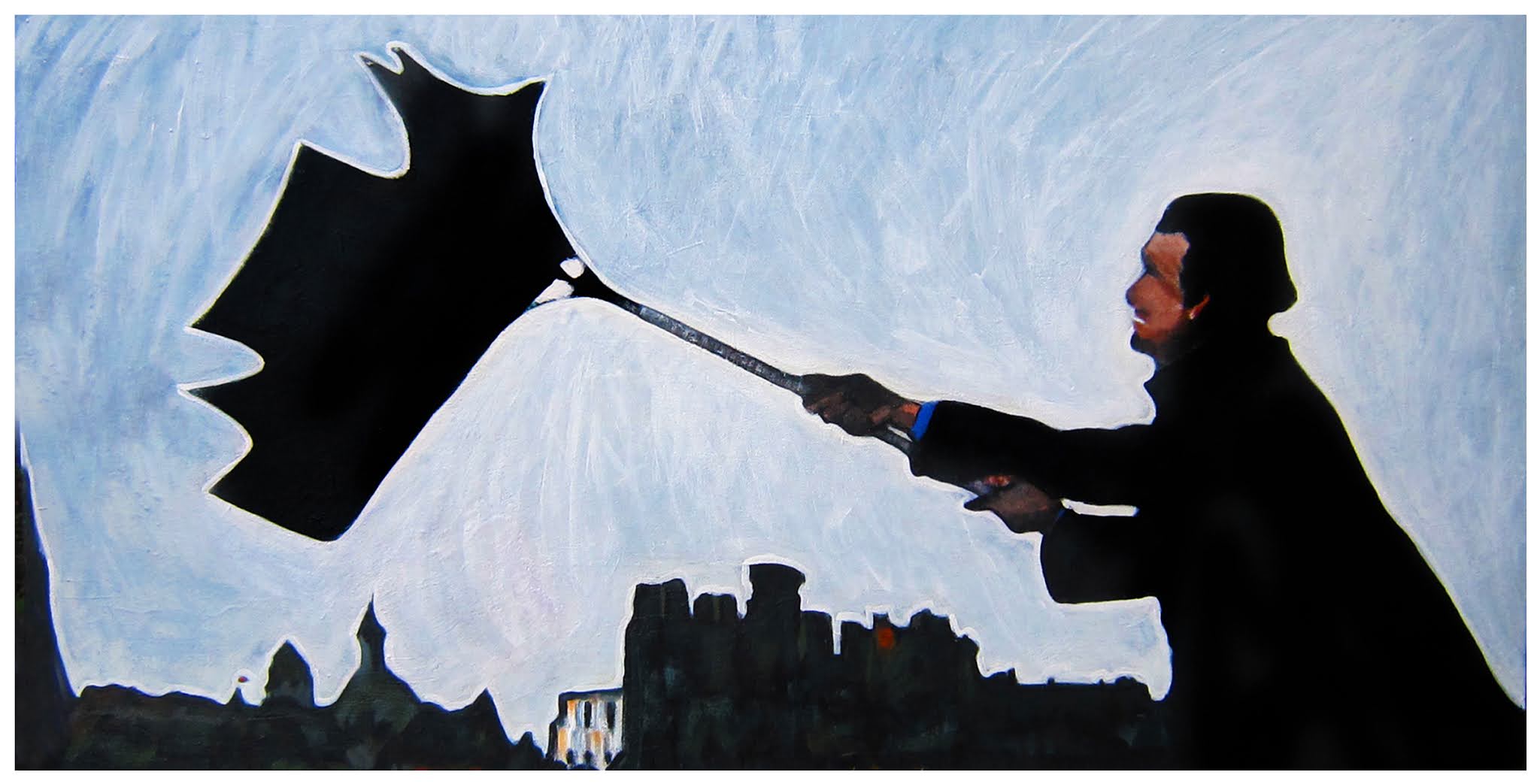
Tuesday, 27 July 2021

It's not someone's age that makes someone old or young, it's his/her mindset.


Old? Nah, age is just a number so some of us may say.
Another thing some of us may say is; you're only as old as you feel.
Then there are some of us who'll use whatever method we can find
to keep old age at bay.
Old, may I suggest, is one of those contentious words that keep on
changing meaning as we live and grow through life's many different
passages.
''I'm not old, I'm mature, like a good bottle of red(wine).''
''I would prefer to be viewed as elderly rather than old, please.''
''I'm not old, I'm a senior.''
As I am getting on in years, I am finding that I often compare
myself to a car. As in: As long as the engine is healthy, a few dings and 
 a bit of rust here and there matters less. (A ''rust bucket'' with
a Porsche engine in my view is definitely preferable to the
other way around.)
The ''oil'' which no engine can do without, for me, that ''oil'' is; keeping
 an open mind and keep learning and attaining new information.
In my view, life contains of a number of different ''passages''.
And every passage we go through in life, offer us unique opportunities
to grow in wisdom, insight and understanding.
Some say that old people are set in their ways, unwilling to
embrace the ''new'', and perhaps this may be the case for
some of us, but in my view that does not necessarily have to do 
with how old someone is, rather, it depends on an 
individual's mindset.
I often watch a show called ''Millionaire hot seat'' which is just
a very generic kind of Quiz show but I still enjoy watching it.
What I have started to notice is how often competitors
in the age bracket 20-something to 30-something begin
their answers with ''that's/was before my time, but....''.
For me this is a very strange thing to say.
Is it meant to be some sort of disclaimer?
''I wasn't born then so why/how should I know?''
This puzzles me because when one is in one's 20's/30's, 
basically everything before one's birth is what is called
history, and history is taught in most schools.
(I was not alive in 1865, but I still know that that was when
the American Civil war ended, ... for instance.)

''If you don't know history, then you don't know anything.
You are a leaf that doesn't know it is part of a tree.''
(Michael Crichton)

History is more than dates, places, wars, inventions, buildings,
kings and queens, catastrophes, etc. etc. etc.
History, as I view it, provides context not only to the past but
also to the present.

''Those that fail to learn from history are doomed to repeat it.''
(Winston Churchill)

In cultures that glorifies youth it can be difficult for older
people to feel that they matter, that they are still valued
and appreciated for what they contribute and have contributed.
We need to get rid of unhelpful stereotyping and stop paying too much
attention to ''isms''. (Ex: Boomers are responsible for todays troubles. 
Aka: ''agism'')
The aging process is an inevitable part of living and basing 
our treatment of our fellow human beings simply on
how many years he or she has lived could in my view
potentially rob us of unique opportunities for gaining a greater 
insight and understanding of what it is to be a human.

''I rather be an old VW Beetle with a Porsche engine
than a Porsche with an old VW engine.''
(Citizen Z)

''The wisest young is the young who can look at the
world through they eyes of the elderly.''
(Mehret Murah ildan)

''The wisest elderly is the elderly who can look at the
young through the eyes of a youth.''
(Citizen Z)

''Of course I know how old I am!
Well, I know when I was born.
I don't like doing the math so I usually just
ballpark it.''
(stuff i wrote down)

about the image: photo titled ''Bathing beauties''
Stay visible, put on a bathing suit!

Monday, 19 July 2021

What we say and what someone hears us say, can be very different things.......

Why do we scream?

There may be a bunch of different reasons as to why one may

scream, but in general I guess we mostly do so to be sure that

we are being heard.

Although, the volume at which we speak does not necessarily

 indicate the importance or weight of the words being spoken.

(It should be said though, loudly spoken words usually

get more attention than softly spoken ones.)

Speech communication (talking) involves a sender, 

a message, and a receiver.

Just bear with me here.....the thing with saying things,

is that what someone says(sender) and what someone hears(receiver), 

can be very different things (the message).

Sender: Did you take out the rubbish bin?

Message: Did you take out the rubbish bin?

Receiver: Why are you asking? I always take out

the rubbish bin!

Sender: I'm only asking because it's so full and it stinks.

 If you hadn't, I was just going to do it myself, that's all.


As for repeating the same mistake over and over, this is one

that I seem to have a problem with correcting.

I keep forgetting that the message that I think I am sending

may not be the message that the receiver hears.

While I was doing a course on crisis counseling a few

years ago it became abundantly clear to me how important

it is to make sure that the message the receiver hears is

the same message that I, or whoever the sender is,

 intended to send.

It can be easy to forget that words are not absolutes,

rather, they are mere approximations, coloured, and interpreted

according to an individual's understanding of them.

''You look nice today" you may say to someone

who may then proceed to respond with: ''So there are days when I don't?''

What? What happened? How did a simple innocuous message

turn into a ''critical'' one? What did the receiver hear?

Is this perhaps about semantics?

I am referring here to the branch of linguistics and logic

concerned with ''meaning''. In short, the meaning of a word.

A: ''Can you please lower your voice?''

B: ''Define lower please, because if you want me to whisper

why don't you just say so?''

A: ''I'm going to be a bit late tonight.''

B: ''Late as in 30 minutes, two hours, what?''

The English language is excellent in many ways, but it can

also be extremely ambiguous and confusing at times methinks.

(At this stage in my life I find that there are very few words

that can't be misunderstood one way or another.)

I just wanted to be real..........as in? Not virtual?

I am telling the truth........as in? According to what you believe

or what you know?

For instance, did you know that

there are 25 different meanings to the words: keep, round, see, 

sound etc. and 37 for the words: close, get, right?

About the meaning of words... language, when it comes down

to it, in my view, is a mere system of symbols which we use to 

express meaning. Meaning, is not in the language itself, 

rather, meaning is in the minds of the people who uses 

language to share their experiences, ideas, feelings, etc.

with each other.

It may seem as if meaning is in the word itself but perhaps

it may be more useful to think of words as ''empty vessels''.

Take the word real for instance. Nowadays this saying

is very common: ''Let's be real.'' What may the word real

mean in this sentence? It could mean: real as in honest, as

in speaking from the heart, as in facts and figures, etc.

Alas, the meaning of a word is not in the word itself, but in

the meaning ascribed to it by both by the sender and 

the receiver. Hence, we often misunderstand each other.

It's not what our message does for the receiver, 

but what the receiver does with our message,

that determines how effective we are at exchanging

our ideas and experiences with others.

Sender: ''I feel lost.''

Message: I'm not sure of my direction in life right now.

Receiver: ''Lost in what way?''

Message interpreted by receiver: ''Lost as in himself or as

in what his next move is?''

Sender: ''Lost as to whether I should look for another job or not.'' 

Receiver: ''Well, what's your options?"

If the sender and receiver happened to be in a car when the

conversation took place, the receiver could have just responded with:

''Well, what does the GPS say?''

One of the most important lessons I learned when I was doing

the crisis counseling course was to get out of the habit of

assuming.

Don't assume that you know what someone

means, ask what it means to him/her.

 Don't assume that the message you are sending is the

 message the receiver receives.

Hearing and listening are two different things.

Hearing we do with our ears, listening we do with our

ears and our minds.


''Most people don't listen with the intent to understand;

they listen with the intent to reply.''

(Stephen R. Covey)


''It is possible to hear music

yet not understand it.

 If we want to understand it, 

we need to listen.''

(Citizen Z)


about the image: Coloured ink, graphite, on paper edited in Photoshop

ps: sorry about the spacing...not intentional, a ghost in the machine

Wednesday, 7 July 2021

''Seek not to be popular, rather seek to be good and popularity will find you.''

What makes someone ''popular''?
Money? Looks? Status? Smarts? Physical prowess? etc. etc.
For many of us the word ''popular'' may instantly transport
us back to our schooldays. Those days when most of us
wanted to belong to ''the cool group'', to ''the most popular'',
to ''those'' always invited to all the parties, those who always
had the coolest, newest stuff.
The way we experienced our own ''popularity'' ranking to be during
(especially but not only) our high school years often seem to leave
an indelible mark on our soul. 
Being viewed as a popular person, whether we like to admit it
or not, is something many of us desire. 
And thanks to Facebook, Twitter, etc. etc. etc. that desire
can at times be satisfied. ''Yay! Ten thousand likes on my post!! or
yay, I have 30.000 followers on Twitter.''
I was not a popular person through my school years, I was
definitely classified as a ''freak''.
In short, school for me was agony until I was accepted
into the Conservatorium of Music and suddenly found
myself surrounded by other ''freaks''.
(Although, even there some people were more popular
than others, however, rather than popularity being based
upon ''luck of the genetics draw'' (looks, status, money, etc.)
it seemed to depend more on good communication skills, attitude, 
friendliness and musical abilities.)
Why is popularity so important to us humans?
Through much research done by scientist into the subject of 
popularity they have learned that it is something of a
paradox. Though it may be a fundamental desire
in human nature to be popular it doesn't necessarily mean
that it is always good for us.
Although one may think that most popular people are
happier people, that is not always the case.
This, some suggest, is because there are different types
of popularity.
Popularity founded on status as in being well known,
being able to bend others to his or her will, being ''cool'',
is different to being popular due to ''likability''.
Likability as in being kind, caring, supportive etc. etc.
Failing to recognize the difference between these two
different types of popularity can have long lasting consequences.
A person's status can suddenly change whereas a persons
likability often stays the same.
Status and likability does not only belong to our
school years, they also belong to our adult social hierarchy.
Popularity, in my view, is very much a part of the adult ''playground''
and it can affect productivity and innovation, atmosphere and
cooperation at a workplace. 
In between gigs(music) I used to work as a warehouse worker.
Sometimes picking orders, sometimes packing orders, sometimes
both. It was often very physically taxing, consisted of long hours and 
for me, most of the time exceedingly boring.
 To make the job a little less boring I would
try to find new and more efficient ways of doing my job.
This made me very popular with the bosses, but most unpopular
with my co-workers. ''Why are you working so hard? You
get paid either way'' my co-workers would tell me.
I would try to explain to them that it was just my way of
trying to make the time go faster, but my explanation was
never accepted. I decided that my worth as a human being
did not depend on others opinion of me, rather, it depended on
my opinion of me.
Basing our self-worth on being liked by others, or being ''popular'',
or having lots of followers on social media, can be risky.
A slip of the tongue, a momentarily mad rant, an overly sarcastic 
remark can potentially change our status or likability in the 
blink of an eye.
(Us humans are fickle, we are quick to judge but slow to forgive.)
Some people are popular because they are inherently kind, generous,
friendly, open-minded, funny, etc. etc., in short, being with
or around them makes us feel good.
Some people are popular for more superficial reasons such as
they are ''cool'', they are ''hot'', famous, infamous, wealthy,
have lots of followers, etc. etc.
Marilyn Monroe died alone in her home on August the fifth
1962 of a drug overdose. She was only 36 years old.
An icon and one of the most famous of all movie actresses, she
died alone. Being popular did not protect her from loneliness,
nay, her popularity perhaps was a contributing factor in
preventing her for forming stable, meaningful, and 
long lasting relationships.

''Seek not to be popular, rather seek to be good
and popularity will find you.''
(Citizen Z)

''It's much easier on the emotions when one sees
life as an experiment rather than a struggle for popularity''.
(Criss Jami)

''It's quite naive to believe that popularity is the remedy
for loneliness. Loneliness does not necessarily equal
physical solitude, it is the inability to be one self
and rightfully represented as oneself.''
(Criss Jami)

about the image: graphite on paper

Monday, 28 June 2021

Don't let the weather get you down......


''A change in the weather is sufficient to recreate the world and
ourselves.'' (Marcel Proust)

When it comes to small talk, the weather is often a safe bet.
Perhaps it can be likened to a code that can be used to start
 conversations and overcome social inhibitions.
When I lived in the UK, the weather was a very common topic.
Especially when it was nice weather.
A clear blue sky with a friendly sun seemed to put a little
zing in most people's step.
There were picnics, walks, and games in the parks to be had.
Ice-creams to be devoured, cups of tea to be sipped,
and intimate conversations to be enjoyed.
 Sunny days were days,... for being outside.
 In a country often draped in gray clouds and on-and-off
downpours, being able to feel the sun on one's face,
to remove a layer or two of clothing, I can imagine would probably
feel quite exhilarating.
You see, I believe that the weather affects us.
Not only physically, but according to some science, also
psychologically.
Rain (yay! boo!) is vital for life and growth,
but too much rain, can be devastating and potentially deadly.
Sunshine (yay! boo!), vital for life and growth, if too much,
can also be devastating and potentially deadly.
For someone who relies on the weather for their livelihood,
the weather is a serious subject. Floods and drought can often
lead to significant mental health consequences for farmers
and all those who work in areas that depend on the weather.
Australia is a country with huge farms but not until I visited
one personally did I realize just how important the weather is
 for the farmers.
 To be a farmer here in Australia takes a lot
of stamina, courage and resilience.
The farmer has to contend with bush fires, drought, insect and
rodent infestations, water spouts, hurricanes, etc. etc. etc.
Just so we are on the same page, a definition of the term weather.
Weather incorporates components such as: temperature, 
atmospheric pressure, wind, humidity, 
precipitation and cloudiness.
Although some of us may like windy and rainy days,
we have no problem with barometric pressure or humidity,
for some other of us however, they are an issue.
Windy days can be catastrophic for people suffering
with allergies, rainy or humid days can make some people
moody, irritable, and or tired. Barometric pressure can
trigger headaches in some of us but temperature, I contend,
 affects most of us in some way or another.
My first few years here in OZ, I experienced only two seasons:
Hot and bloody hot. A few years later I added muggy and bone-dry.
Now they are back to two: hot and muggy, bloody hot and bone-dry.
(One may think that I ought to be used to the weather here by now,
but for some inexplicable reason, ... I'm not.)

Fossicking through a number of sites on weather and 
how we are affected by it, I am afraid that I have found
nothing yet that meets the criteria that I am looking for.
All I can say for sure is that there seems to be a general
consensus on most of the sites that the 
weather does affect us.
In conclusion: I can't make one. 
There are way too many variables.
How the weather affects us depends
 on the day, on the time of day,
where we are, where we are going,
who we are with, who we left behind,
what we are doing, what we did,
what we are feeling, what we are thinking,
what we believe, what we perceive,
etc. etc. etc.

''It can be hard to look cool and be warm at the same time.''

''The sound of the rain needs no translation.''
(Allan Watts)
 
about the image: acrylic on canvas

Monday, 14 June 2021

There is solace to be found in the arts........


 They called her ''Lady Day'', but her real name was Eleanora Fagan.
Professionally she was known as Billie Holiday, and though she
didn't live a long life, her artistry still lives on today.
Her life was not a happy one. Already at the tender age of nine she
had to learn to fend for herself. 
When she was 15 years old she renamed herself ''Billie'' and
began to sing in local clubs in New York.
Music, she discovered, offered her solace.
Like so many other musicians/artists before and after her,
she struggled with substance abuse, failed relationships and
a life fraught with many hardships.
Eventually her hard life caught up with her and she died
in a hospital on July 17, 1959.
In spite of all her hardship, substance and physical abuse,
she still managed to produce amazing music and is by many
musicians considered as one of the best jazz vocalists of
all time.
''To be a ''real'' artist you need to suffer for your art.''
''You don't know how to play the Blues
unless you've lived it.''
Is there something to the trope of the tortured artist
or is it just another myth?
''We need to stop using ''the myth of the tortured artist'' to
dismiss creatives with mental health issues and instead
recognize the therapeutic potential of art.'' (Cerys Wiles)

Is turmoil and hardship somehow some kind of 
necessary ''fuel'' for creativity?
Is it possible to live a contented, harmonious and happy
life and be a great artist?
Why is an artist's suffering so often perceived as a necessity for a
''true'' artistic expression although recent research shows
that rather than improve creativity, it impedes it?
What if it is not suffering that makes great artists great
but their ability to express emotions that others can connect
and relate to?
Human beings, we are told, are social beings. We like to
share and exchange experiences with others. Doing so
we create relationships, form bonds and help us understand 
ourselves and others. Usually we do this with the use of
words, but sometimes words just aren't enough.
 This.... is the time when the arts can come in handy.

''Art and music shine a light of meaning on ordinary life,
and through them we are able to confront the things that
trouble us and to find consolation and peace in their
presence.'' (Roger Scruton)

''Music expresses that which cannot be said and on
which it is impossible to remain silent.'' (Victor Hugo)

''Music can change the world." (Ludwig van Beethoven)

''Dance is the hidden language of the soul.'' (Martha Graham)

''Art is not what you see, but what you make others see.'' (Edgar Degas)

''When artists give form to revelation, their art can advance,
deepen and potentially transform the consciousness of their
community.'' (Alex Grey)

In my view, it was not all the suffering that Billie Holiday 
experienced that made her a great singer, rather, 
what made her a great singer was that she kept on singing
in spite of her tortuous life.

about the image: ''Lady Day''     ink on paper

Monday, 7 June 2021

Some ideas are excellent no matter how old they may be.............


 The waitress nonchalantly and from the corner of her mouth
told me to just ''swipe the phone with the QR stamp''.
''Sorry'' I said, ''I don't have a smartphone''.
(Well, I do, but I had left it at home that day.)
''Is there another way of signing in perhaps?'' I asked.
I was handed an iPad and a minute later I was signed in.

For almost two years our little family lived in the UK, North Devon.
 Actually, to be more precise, we lived in a quaint little village called Braunton.
Braunton is near the Saunton Sands, which is where my spouse's
elderly parents lived in a small, white-chalked cottage
with a view of the open Celtic Sea. 
Occasionally, some brave surfer dressed in rubber from top to
toe would ride the waves and I couldn't help but admire
his or her resolve to ignore the chilling weather.
 The transition from a sunny, warm and tropical Queensland
to a cold, wet and windy North Devon, was quite the challenge.
(I think I was shivering with cold for our first two weeks in
Britain.)
But, we were there on a mission, 
we wanted our boy to have some time 
with his grand-parents before it would be too late.
We found a reasonably priced but surprisingly wonderful place to rent
 in Braunton, and once I had set up my little recording studio and practice room,
I felt settled. 
My partner started to look for a job, we enrolled our
son in ''kindie'' and I started to work on an album.(music)
We bought a Triumph Stag and decided to explore Devon.
Though it took some time to get used to safely navigating the mostly
single and very narrow lanes, the beauty of the landscape was
awe inspiring. 
At times it felt almost as if we might have entered into a Constable, 
Turner or Gainsborough painting. Even the bright red telephone
booths scattered through the villages and hamlets seemed to belong,
although they perhaps signified a more contemporary time than
the landscape in which they stood tall.
These days, most of those red telephone booths have been
removed. And, as far as I can ascertain, phone booths in general
and in many countries, are often viewed as obsolete.
Which in my view is a shame.
When I was a kid, a phone booth offered privacy, a shelter from
nasty weather, a hiding place from bullies, a secret meeting place
for friends, and a point of access for getting help. (Police, hospitals, etc. etc.)
Taking or making phone calls, if I remember right, was generally
 viewed as more of a private rather than a public undertaking.
These days, whether we like it or not, we are often exposed
to other peoples phone conversations.
(I don't know about you, but I find it quite embarrassing.
Before phones became mobile, they used to be designated to
specific places such as the hallway, the office, or the bedroom.
So, whoever was making or receiving a call, would do so in private.)
The development of the capabilities of the mobile phone has
perhaps been so rapid that we haven't had the time to figure
out whether we need to attach some form of etiquette to its use.
Is it okay for instance to:
Accept a call when in the middle of a face to face conversation?
Discuss private/personal matters when strangers can hear it?
Receive and make calls when in a restaurant, coffee shop, 
movie theater, doctor's surgery, etc. etc. ?
I guess the only answer to those questions is: it depends.
There is no doubt that the mobile phone is very handy
in a number of ways. However, walking around a very large
shopping center the other day looking for a public phone
and not finding even one, I can't help but wonder the wisdom
in removing all public phones.
I mean, batteries can die, reception can be iffy, some folks
can't afford expensive smart phones, sometimes we may forget
to bring our phones, etc. etc. 
It's late at night. You're driving through some uninhabited land.
Suddenly you have a tyre blow out. You pull over.
When you get your spare out you discover that it is flat.
You try to call for road assistance on your mobile
 but there's no reception. What will you do?
Probably, you'll lock the car and start walking.
Wouldn't it be nice if just up the road you see
an all lit up phone booth?

Train stations, bus terminals, airports, hotels, motels,
hospitals, etc. etc. used to have lots of public phones and or phonebooths.
Today........... not so much.
I think this is a mistake. 
Some ideas are excellent no matter how old they may be.

''We can only blame ourselves for all the crime and violence today.
We removed all the phone booths and now Superman
has nowhere to change.''
(Quotemaster)

about the image: acrylic on canvas, some editing

Tuesday, 25 May 2021

What's so good about caring?.......


Caring.
Why should we care about others?
Are we even able to truly care about others without (though
probably subconsciously) it somehow
being (in some form or another), transactional?
Is there a ''right amount'' of caring for instance?
In order for us to deem something/someone worthy
of our care, is there some sort of ''test'' to be passed?
Are we capable of bypassing any moral and or ethical
judgements and just care regardless?
Or do we care because when we care for others we
feel better about ourselves?
Is ''true'' altruism (=selfless concern for the benefit of others)
 even possible?
At the bottom of every good ''deed'' that we do for
the benefit of someone/something else, can we really
be sure that personal gratification of some form
does not enter into it?
 My so far humble research into this matter tells me that
there is no definitive answer.
A being who experiences itself as a self, is such a being capable
of experiencing anything outside of the self?
What do we mean with caring?
When I began this post I did not realize just how
difficult it is to pinpoint what caring is. For instance:
 It is something one does, it something one experiences on
an emotional level, and often it involves a lot of different feelings
and thoughts.
In my view, it seems caring is a complicated mixture of
social conditioning, personal background/history, ethical
and moral perspective, and functioning belief system.
''Caring is the right thing to do, caring about others
makes us good people, caring for each other is the foundation
of a good society, my folks always told me that
 caring for each other is what a family does, etc. etc.''
For some of us, caring comes easy, for some of us others,
not so much. According to some recent research done
on some students in the US, tests show that students
have been scoring lower and lower on empathy(caring) tests.
In an episode of the Simpsons a teary-eyed Lisa asks her father:
''But dad, why don't you say something?''
Homer: ''Because I just don't care, Lisa.''
For Lisa, not caring is not an option. 
She cares about everything.
Some research say, many of us don't.
But we can change.
Every new day we are given, we are given
 an opportunity to care more deeply,
more passionately, and more sincerely.


''Every act of caring, carries with it its own unique reward.''
(Citizen Z)

''Never believe that a few caring people can't change the world.
For, indeed, that's all who ever have.''
(Margaret Mead)

''Too often we underestimate the power of a touch, a smile,
a kind word, a listening ear, an honest compliment, or
the smallest act of caring, all of which have the potential
to turn a life around.''
(Leo Buscaglia)

about the image: acrylic on canvas, some photoshop editing