Monday, 28 June 2021

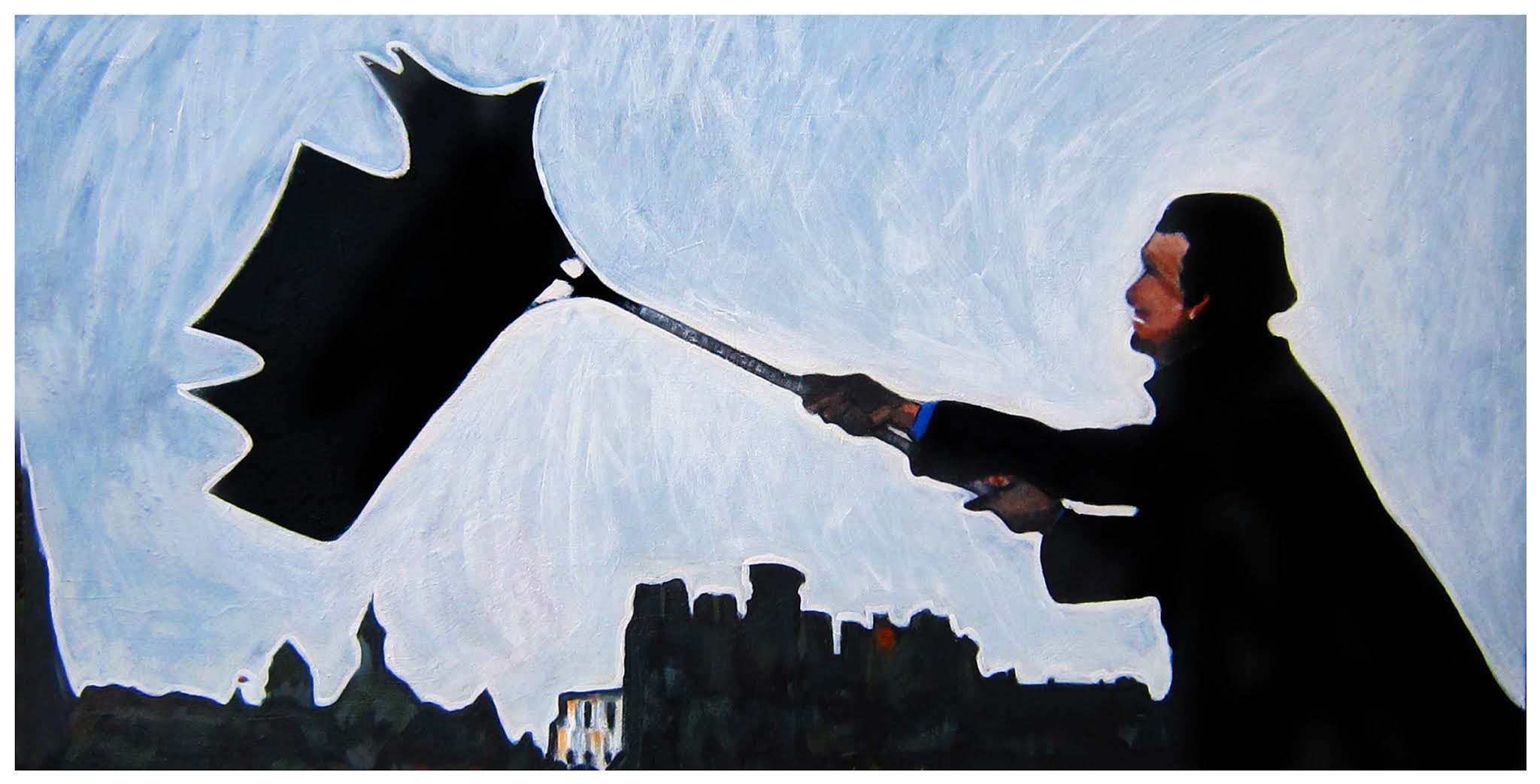
Don't let the weather get you down......


''A change in the weather is sufficient to recreate the world and
ourselves.'' (Marcel Proust)

When it comes to small talk, the weather is often a safe bet.
Perhaps it can be likened to a code that can be used to start
 conversations and overcome social inhibitions.
When I lived in the UK, the weather was a very common topic.
Especially when it was nice weather.
A clear blue sky with a friendly sun seemed to put a little
zing in most people's step.
There were picnics, walks, and games in the parks to be had.
Ice-creams to be devoured, cups of tea to be sipped,
and intimate conversations to be enjoyed.
 Sunny days were days,... for being outside.
 In a country often draped in gray clouds and on-and-off
downpours, being able to feel the sun on one's face,
to remove a layer or two of clothing, I can imagine would probably
feel quite exhilarating.
You see, I believe that the weather affects us.
Not only physically, but according to some science, also
psychologically.
Rain (yay! boo!) is vital for life and growth,
but too much rain, can be devastating and potentially deadly.
Sunshine (yay! boo!), vital for life and growth, if too much,
can also be devastating and potentially deadly.
For someone who relies on the weather for their livelihood,
the weather is a serious subject. Floods and drought can often
lead to significant mental health consequences for farmers
and all those who work in areas that depend on the weather.
Australia is a country with huge farms but not until I visited
one personally did I realize just how important the weather is
 for the farmers.
 To be a farmer here in Australia takes a lot
of stamina, courage and resilience.
The farmer has to contend with bush fires, drought, insect and
rodent infestations, water spouts, hurricanes, etc. etc. etc.
Just so we are on the same page, a definition of the term weather.
Weather incorporates components such as: temperature, 
atmospheric pressure, wind, humidity, 
precipitation and cloudiness.
Although some of us may like windy and rainy days,
we have no problem with barometric pressure or humidity,
for some other of us however, they are an issue.
Windy days can be catastrophic for people suffering
with allergies, rainy or humid days can make some people
moody, irritable, and or tired. Barometric pressure can
trigger headaches in some of us but temperature, I contend,
 affects most of us in some way or another.
My first few years here in OZ, I experienced only two seasons:
Hot and bloody hot. A few years later I added muggy and bone-dry.
Now they are back to two: hot and muggy, bloody hot and bone-dry.
(One may think that I ought to be used to the weather here by now,
but for some inexplicable reason, ... I'm not.)

Fossicking through a number of sites on weather and 
how we are affected by it, I am afraid that I have found
nothing yet that meets the criteria that I am looking for.
All I can say for sure is that there seems to be a general
consensus on most of the sites that the 
weather does affect us.
In conclusion: I can't make one. 
There are way too many variables.
How the weather affects us depends
 on the day, on the time of day,
where we are, where we are going,
who we are with, who we left behind,
what we are doing, what we did,
what we are feeling, what we are thinking,
what we believe, what we perceive,
etc. etc. etc.

''It can be hard to look cool and be warm at the same time.''

''The sound of the rain needs no translation.''
(Allan Watts)
 
about the image: acrylic on canvas

Monday, 14 June 2021

There is solace to be found in the arts........


 They called her ''Lady Day'', but her real name was Eleanora Fagan.
Professionally she was known as Billie Holiday, and though she
didn't live a long life, her artistry still lives on today.
Her life was not a happy one. Already at the tender age of nine she
had to learn to fend for herself. 
When she was 15 years old she renamed herself ''Billie'' and
began to sing in local clubs in New York.
Music, she discovered, offered her solace.
Like so many other musicians/artists before and after her,
she struggled with substance abuse, failed relationships and
a life fraught with many hardships.
Eventually her hard life caught up with her and she died
in a hospital on July 17, 1959.
In spite of all her hardship, substance and physical abuse,
she still managed to produce amazing music and is by many
musicians considered as one of the best jazz vocalists of
all time.
''To be a ''real'' artist you need to suffer for your art.''
''You don't know how to play the Blues
unless you've lived it.''
Is there something to the trope of the tortured artist
or is it just another myth?
''We need to stop using ''the myth of the tortured artist'' to
dismiss creatives with mental health issues and instead
recognize the therapeutic potential of art.'' (Cerys Wiles)

Is turmoil and hardship somehow some kind of 
necessary ''fuel'' for creativity?
Is it possible to live a contented, harmonious and happy
life and be a great artist?
Why is an artist's suffering so often perceived as a necessity for a
''true'' artistic expression although recent research shows
that rather than improve creativity, it impedes it?
What if it is not suffering that makes great artists great
but their ability to express emotions that others can connect
and relate to?
Human beings, we are told, are social beings. We like to
share and exchange experiences with others. Doing so
we create relationships, form bonds and help us understand 
ourselves and others. Usually we do this with the use of
words, but sometimes words just aren't enough.
 This.... is the time when the arts can come in handy.

''Art and music shine a light of meaning on ordinary life,
and through them we are able to confront the things that
trouble us and to find consolation and peace in their
presence.'' (Roger Scruton)

''Music expresses that which cannot be said and on
which it is impossible to remain silent.'' (Victor Hugo)

''Music can change the world." (Ludwig van Beethoven)

''Dance is the hidden language of the soul.'' (Martha Graham)

''Art is not what you see, but what you make others see.'' (Edgar Degas)

''When artists give form to revelation, their art can advance,
deepen and potentially transform the consciousness of their
community.'' (Alex Grey)

In my view, it was not all the suffering that Billie Holiday 
experienced that made her a great singer, rather, 
what made her a great singer was that she kept on singing
in spite of her tortuous life.

about the image: ''Lady Day''     ink on paper

Monday, 7 June 2021

Some ideas are excellent no matter how old they may be.............


 The waitress nonchalantly and from the corner of her mouth
told me to just ''swipe the phone with the QR stamp''.
''Sorry'' I said, ''I don't have a smartphone''.
(Well, I do, but I had left it at home that day.)
''Is there another way of signing in perhaps?'' I asked.
I was handed an iPad and a minute later I was signed in.

For almost two years our little family lived in the UK, North Devon.
 Actually, to be more precise, we lived in a quaint little village called Braunton.
Braunton is near the Saunton Sands, which is where my spouse's
elderly parents lived in a small, white-chalked cottage
with a view of the open Celtic Sea. 
Occasionally, some brave surfer dressed in rubber from top to
toe would ride the waves and I couldn't help but admire
his or her resolve to ignore the chilling weather.
 The transition from a sunny, warm and tropical Queensland
to a cold, wet and windy North Devon, was quite the challenge.
(I think I was shivering with cold for our first two weeks in
Britain.)
But, we were there on a mission, 
we wanted our boy to have some time 
with his grand-parents before it would be too late.
We found a reasonably priced but surprisingly wonderful place to rent
 in Braunton, and once I had set up my little recording studio and practice room,
I felt settled. 
My partner started to look for a job, we enrolled our
son in ''kindie'' and I started to work on an album.(music)
We bought a Triumph Stag and decided to explore Devon.
Though it took some time to get used to safely navigating the mostly
single and very narrow lanes, the beauty of the landscape was
awe inspiring. 
At times it felt almost as if we might have entered into a Constable, 
Turner or Gainsborough painting. Even the bright red telephone
booths scattered through the villages and hamlets seemed to belong,
although they perhaps signified a more contemporary time than
the landscape in which they stood tall.
These days, most of those red telephone booths have been
removed. And, as far as I can ascertain, phone booths in general
and in many countries, are often viewed as obsolete.
Which in my view is a shame.
When I was a kid, a phone booth offered privacy, a shelter from
nasty weather, a hiding place from bullies, a secret meeting place
for friends, and a point of access for getting help. (Police, hospitals, etc. etc.)
Taking or making phone calls, if I remember right, was generally
 viewed as more of a private rather than a public undertaking.
These days, whether we like it or not, we are often exposed
to other peoples phone conversations.
(I don't know about you, but I find it quite embarrassing.
Before phones became mobile, they used to be designated to
specific places such as the hallway, the office, or the bedroom.
So, whoever was making or receiving a call, would do so in private.)
The development of the capabilities of the mobile phone has
perhaps been so rapid that we haven't had the time to figure
out whether we need to attach some form of etiquette to its use.
Is it okay for instance to:
Accept a call when in the middle of a face to face conversation?
Discuss private/personal matters when strangers can hear it?
Receive and make calls when in a restaurant, coffee shop, 
movie theater, doctor's surgery, etc. etc. ?
I guess the only answer to those questions is: it depends.
There is no doubt that the mobile phone is very handy
in a number of ways. However, walking around a very large
shopping center the other day looking for a public phone
and not finding even one, I can't help but wonder the wisdom
in removing all public phones.
I mean, batteries can die, reception can be iffy, some folks
can't afford expensive smart phones, sometimes we may forget
to bring our phones, etc. etc. 
It's late at night. You're driving through some uninhabited land.
Suddenly you have a tyre blow out. You pull over.
When you get your spare out you discover that it is flat.
You try to call for road assistance on your mobile
 but there's no reception. What will you do?
Probably, you'll lock the car and start walking.
Wouldn't it be nice if just up the road you see
an all lit up phone booth?

Train stations, bus terminals, airports, hotels, motels,
hospitals, etc. etc. used to have lots of public phones and or phonebooths.
Today........... not so much.
I think this is a mistake. 
Some ideas are excellent no matter how old they may be.

''We can only blame ourselves for all the crime and violence today.
We removed all the phone booths and now Superman
has nowhere to change.''
(Quotemaster)

about the image: acrylic on canvas, some editing

Tuesday, 25 May 2021

What's so good about caring?.......


Caring.
Why should we care about others?
Are we even able to truly care about others without (though
probably subconsciously) it somehow
being (in some form or another), transactional?
Is there a ''right amount'' of caring for instance?
In order for us to deem something/someone worthy
of our care, is there some sort of ''test'' to be passed?
Are we capable of bypassing any moral and or ethical
judgements and just care regardless?
Or do we care because when we care for others we
feel better about ourselves?
Is ''true'' altruism (=selfless concern for the benefit of others)
 even possible?
At the bottom of every good ''deed'' that we do for
the benefit of someone/something else, can we really
be sure that personal gratification of some form
does not enter into it?
 My so far humble research into this matter tells me that
there is no definitive answer.
A being who experiences itself as a self, is such a being capable
of experiencing anything outside of the self?
What do we mean with caring?
When I began this post I did not realize just how
difficult it is to pinpoint what caring is. For instance:
 It is something one does, it something one experiences on
an emotional level, and often it involves a lot of different feelings
and thoughts.
In my view, it seems caring is a complicated mixture of
social conditioning, personal background/history, ethical
and moral perspective, and functioning belief system.
''Caring is the right thing to do, caring about others
makes us good people, caring for each other is the foundation
of a good society, my folks always told me that
 caring for each other is what a family does, etc. etc.''
For some of us, caring comes easy, for some of us others,
not so much. According to some recent research done
on some students in the US, tests show that students
have been scoring lower and lower on empathy(caring) tests.
In an episode of the Simpsons a teary-eyed Lisa asks her father:
''But dad, why don't you say something?''
Homer: ''Because I just don't care, Lisa.''
For Lisa, not caring is not an option. 
She cares about everything.
Some research say, many of us don't.
But we can change.
Every new day we are given, we are given
 an opportunity to care more deeply,
more passionately, and more sincerely.


''Every act of caring, carries with it its own unique reward.''
(Citizen Z)

''Never believe that a few caring people can't change the world.
For, indeed, that's all who ever have.''
(Margaret Mead)

''Too often we underestimate the power of a touch, a smile,
a kind word, a listening ear, an honest compliment, or
the smallest act of caring, all of which have the potential
to turn a life around.''
(Leo Buscaglia)

about the image: acrylic on canvas, some photoshop editing

Tuesday, 11 May 2021

Sometimes we cry, so what? Our tears show we are human.


I was once asked by a friend to write about pain on my blog.
What kind of pain would you like me to write about? I asked.
The kind that never goes away, she answered.

Knowing that my friend has had to cope with crippling
arthritic and emotional pain for most of her life, I have
to admit that I wasn't quite sure where to start. 
What is pain? for instance. A suggestion:
Physical pain: an unpleasant sensory experience associated with
actual (or potential) tissue damage.
Psychological/emotional pain: an unpleasant sensory and mind
 experience associated with both a physical and non-physical origin.
Whether the pain is associated with tissue or emotional ''damage'',
pain....... hurts.
How we experience that hurt is different for each of us. 
In my view, there are aspects that influence how we experience pain
whether it be physical or psychological, such as
 personality, level of pain threshold, attitude, belief-system,
upbringing, social context, etc. etc.
Sadly, psychological/emotional pain is often regarded as less
serious than physical pain.
''What do you mean, heart-ache? The heart is just a pump and unless
you're having a heart attack, it isn't actually hurting''.
''Just get over it, it's all in your head.''
''Mind over matter, that's all it is. Nothing is broken is it?''
For those of us who live with chronic physical pain, more
often than not, we also experience different levels of emotional pain.
It takes a lot of mental energy to cope with chronic pain and
though there are meds for all sorts of chronic illnesses, some
have such awful side-effects that rather than being helpful
they may cause more issues and more ''pain''.
(The Oxy epidemic springs to mind.)
I don't know if it's a universal thing, but in my experience
''society'' often prefers that one hides one's emotional pain
and puts on brave face rather than showing it.
Most of us probably feel quite uncomfortable, for a bunch 
of different reasons, in the company of someone in pain.
Many of us want to help in some way so we do what
most of us usually do, we suggest stuff that we think
may help.
Our ''mirror neurons'' kick in.
''Have you tried...? Have you considered...?''
or ''I know what you are going through because when I.....''
We are just trying to be helpful, but here's the thing,
it would probably be experienced as more helpful and supportive
 if instead of suggesting things to do for the sufferer, we simply
ask: ''You seem to be in a lot of pain, is there anything
 I can do for you?''
''You seem really anxious and down, would you like me to
hang around for a while?''
''You seem really angry and frustrated, would you like
to talk about it?''
For those of us who suffer with both physical and
 emotional/psychological chronic pain it can be
tempting to want to withdraw from company,
to isolate ourselves, to seek ''respite'' in pills,
alcohol, or something, anything, that can help distract us 
from our pain.
Good news: Distraction works. However, there's no need for
drugs or booze or any other destructive ingredients.
Distraction Technique is a ''tool'' that can be very helpful.
Basically it just entails us putting all our attention
and energy into an activity that redirects our mind away
from our suffering. It actually blocks pain signals before
they reach the brain.
If I am in a lot of pain, I watch something (usually on a big
screen) evocative and absorbing, or listen to some
serious music in head-phones.
If the pain is less intense, I play scrabble or some sort
of numbers game on the computer while listening
to music or having the telly on in the background.
If the pain is just a low hum, I try to do something creative.
The crux is this: distracting oneself from oneself.
Sometimes coping with pain, whatever kind, can be 
overwhelming, and on such occasions I have found
it quite helpful to allow myself to rage and wallow
in self-pity, but only for ten minutes or so.
Self-pity can be exhausting methinks.

''You never know how strong you are until being
strong is your only choice.''
(Bob Marley)

about the image: acrylic on large canvas
titled ''Pain"

Thursday, 6 May 2021

What is your inner self telling you about you?


The above image is a visual representation of a place that
I go to when my mind refuses to stop it's ''chattering''.

Apparently ''thought-chattering'' is something that afflicts the 
human species.
Ever gone to bed, turned out the light, pulled up the covers
and closed your eyes only to find your mind invaded by a
flurry of thoughts making sleep impossible?
Those in the know reckons that whenever we aren't busy 
doing things the thought-chatter starts up.
Well, supposedly it's always there, it's just that we don't really
notice it when we are engaged in some kind of activity.
Commonly, thought-chatter is often more of the ''negative'' rather than
the ''positive'' kind. 
We may find our thoughts rummaging through the past and picking
out things we regret doing or saying rather than those we are proud or
happy with.
Or we may find our mind pre-occupied with worrying thoughts 
about the future.
Some call this thought-chattering, ''self-talk''.
I first came across the term ''self-talk'' years ago and I have
to say that learning how to recognize my own self-talk has proved
very helpful. 
Basically, self-talk is our own internal dialogue. It is what
we tell ourselves about ourselves and the language we use to do so.
For instance: ''Don't be an idiot! Just go along with it.''
''Don't ask any questions. They will think you're stupid.''
''I'm too soft, I should be stronger.''
''I'll never be able to do that.''
or
''Just do it! You can do it!''
''Just have a go. Trying is worth it.''
''I can do anything when I put my mind to it.''

You know that voice inside of you that keeps commenting
on everything you do and say? that's the voice of your self-talk.
(There are other words for it: inner voice, gut instinct, wise mind,
inner guide, etc. etc.)
I have to admit that when I first read about ''self-talking'' I wasn't sure
of how to hear it, or should I say, notice it.
So, I decided to try and discover if I had an inner dialogue running
in my mind. 
This necessitated stillness and paying attention to my thoughts.
So I did.
What I discovered was that the self-talking never seemed to stop.
I also discovered that since it was my self speaking to me, I 
would be able to choose what the self was saying.
Basically, I decided to change the script of some of the self-talk
running in my mind because I'd found that thoughts pretty
much determines how I feel rather than the other way around.

Here are some examples of my new scripts:
It's okay to change one's mind. 
Failure does not exist, only less hoped for outcomes.
Being passionate and enthusiastic is an asset.
Being sensitive and compassionate is an asset.
Being willing to try something new is an asset.
Self reflection is helpful in gaining insight and wisdom.
Thinking about things one gains a deeper understanding.

It may seem simplistic, but, by changing our critical/negative inner
voice for a more supportive/positive one, how we feel about ourselves
and others, will change.

''Choose the words you say to yourself wisely;
they are creating your reality.''
(Sean Stephenson)

about the image: ink and acrylic on paper, edited in photoshop

Tuesday, 27 April 2021

How trustworthy are you?


 (Just in case you're wondering, the above image is depicting a hand grenade.)


Trust.
Such a small word that encompasses so much.
It colours most of our relationships with our
families, friends, medical practitioners, government officials,
etc. etc. etc.
Trust, although outside of anything to do with any kind
of religion, is in my view still based on faith(belief).
A belief that the people(or government) we trust in will behave in
 certain ways.
Trust however when it boils down to it, rather than being
something solid or certain, I contend is a mere abstract mental attitude.
We trust the postman to deliver our mail, we trust the bank
to look after our money, we trust our doctor to find remedies
and treatments for our illnesses, we trust other drivers to
stop at the red lights, we trust others to adhere to common
courtesies, we trust store clerks not to steal our card details,
etc. etc.
Why? 
Apparently, it's in our ''DNA'' to trust, we are social beings
and already from the get go we begin to socially interact
with others. Our tendency to trust, makes sense from an 
evolutionary perspective, so says some research.
Some even suggest that we trust routinely, reflexively,
and occasionally ''mindlessly''. We especially trust people who
''looks'' a bit like us, or seem to belong to our ''social group''.
Often however, we don't ask ourselves why we trust someone
and mistrust someone else. If someone would ask us: ''why do you
trust ''A'' and not ''B'' when they have the same credentials?'',
sometimes our answer may simply be: ''I don't know really, it's just
a gut feeling.''
Basic trustworthiness in people and institutions around us
as far as I can ascertain, is accumulated through our own 
experiences thereof.
Unfortunately, trust or mistrust, both experiences tend to stick.
Once we have decided on whether a person or ''institution''
(the police, healthcare, employment networks, councils, etc.)
is trustworthy or not, we often don't question our outlook.

Why is a collective trust important in a society?
''Trust is the foundation upon which the legitimacy of
public institutions is built and is crucial in maintaining
social cohesion.''
Why is individual trust important?
Belonging and Love, are some of mankind's most
profound needs, according to Maslow's
Hierarchy (theory) of needs.
Both, require trust as a foundation.
Trust perhaps can be likened to a flexible "glue'' 
that holds things together.
But unlike most glue, ''it can't be bought in a Supermarket''.
Trust, in my view, is not static, it is flexible.
It also is ''organic'', as in: it needs nurturing and TLC.
In my experience, these are some suggestions of
what I believe inspires trust:

Being true to one's word and following through with
actions that solidifies those words.
Respect.
Patience.
Keeping an open mind.
Willingness to listen.
Being supportive.
Transparency.
Never disclosing words spoken in confidence.

These days with Social media, the Dark Net, etc. etc. and the
possibility for anyone to post anything at any time
it can be hard to know who to trust.
Which is reflected in surveys done on peoples trust in
Governments doing their best for their citizens.
According to Edelman's Trust Barometer, it's at an all time low.
Public and Private institutions are run by human beings.
Regardless of position held within those institutions,
it is still a human being with all his/her flaws and biases
who makes the decisions.
We may have little power to influence the level of trustworthiness
in the people who makes decisions ''on our behalf'',
but we do have the power to decide our own
trustworthiness.

''Whoever is careless with the truth in small matters cannot be
trusted in important affairs.'' (Albert Einstein)

''Your character holds the key to your trustworthiness.''
(Jeffrey Gitomer)

about the image: ink and water colour on paper edited in Photoshop